
1 2 3 4 Player Games - Offline
JindoBluArcade
4.61.89K Reviews
- Version
- 3.4.1
- Installs
- 100.00M
- Age Rating
- Everyone
Screenshots
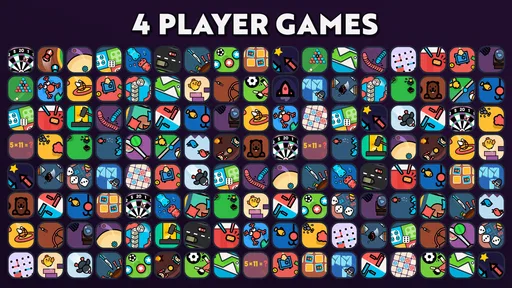



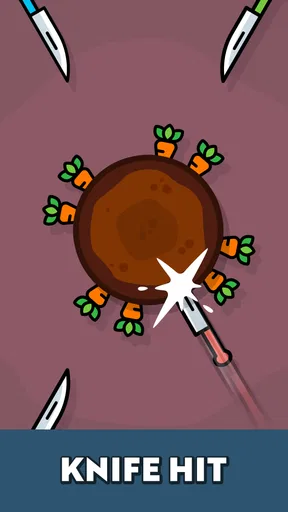



Our Review of 1 2 3 4 Player Games - Offline
 Analysis by Appyee
When I want a quick game to play with people in the same room, I usually care less about a long story and more about how quickly everyone can start having fun. 1 2 3 4 Player Games - Offline is built around that exact situation: one device, several players, and a collection of short arcade challenges that can be passed around or played side by side. I found it most useful as a spontaneous group game rather than something I would open alone for a long session.
The appeal is easy to understand. There is no need to arrange an online lobby or ask everybody to install the same title before playing. One person can bring out a phone or tablet, choose a suitable number of players, and turn a quiet moment into a small competition. That makes it a natural fit for a family room, a school break, a waiting area, or a casual gathering where people want something interactive but do not want to commit to a complicated game.
Developed by JindoBlu, this free arcade game has reached over 100 million installs and holds a 4.7 average from around 164 thousand ratings. Those figures suggest that its simple local multiplayer idea has connected with a very broad audience. It is rated for Everyone, so the presentation is approachable for mixed-age groups, although younger children may still need help taking turns and understanding the rules of each challenge.
How I decide whether it fits the moment
When I judge whether this game belongs on my phone, I start with the occasion rather than the feature list: how many people are present, how much time we have, and whether sharing one screen sounds fun or awkward. That quick check helps me avoid expecting a solo pastime from a group activity. It also sets up a closer look at the situations where this kind of arcade play has a real edge.
The first question is how many people are actually together
The strongest reason to choose this game is that it supports groups rather than just one person. The store summary highlights play for two, three, or four people on a single device, and that changes the way I think about it. Instead of asking whether the game has enough depth for one dedicated player, I ask whether it can keep a small group engaged while everyone shares the same screen.
For two players, the format is usually easiest to manage. Each person can focus on the action without too much crowding, and a short contest can be repeated immediately. Three players create a more social rhythm because someone may be waiting for a turn or watching the others. Four players are where the concept becomes most useful for a group, but also where the physical size of the device matters most. A phone can feel cramped when several hands are hovering around it, while a larger screen makes the shared format more comfortable.
This is an important decision point that a normal solo arcade game does not present. If everyone has a separate phone and wants to play privately, this is not necessarily the most efficient choice. If the goal is to put one device in the middle of a table and get people competing within moments, it makes much more sense.
Short rounds are a strength, not a weakness
I would choose this game when the available time is uncertain. It works well for a quick break because the experience is organized around small arcade-style activities instead of a long campaign that demands concentration for half an hour. A group can play one round, laugh at the result, and stop without feeling that it has abandoned unfinished progress.
That same structure also makes it suitable for changing groups. If one friend leaves, another can join the next contest without needing to understand a complicated backstory. If people are waiting for food or traveling together, the game can fill a few minutes without taking over the entire occasion. In my experience, this flexibility matters more than having a large amount of content when the game is being used socially.
There is a trade-off, though. Players who want a deep arcade system, careful long-term mastery, or a substantial solo challenge may find the short-format design too light. The game is better at creating repeated bursts of interaction than at becoming a personal hobby. I would not install it expecting the same commitment as a dedicated competitive title.
Consider the device before inviting a full group
One practical tip is to test the physical setup before announcing a four-player match. A clean, flat surface helps, especially when several people need to reach the screen. A tablet-sized device is likely to make the shared format easier than a small phone, not because the rules change, but because players can see the action and touch their areas without blocking one another.
I also prefer placing the device where every player has a clear view rather than passing it after every round. That keeps the pace moving and lets spectators understand what is happening. If the group is made up of younger children, setting a simple order for turns can prevent the most common source of friction: everyone touching the screen at once.
This is one of the less obvious strengths of the game. Its value is partly in the way it changes a device from a personal screen into a shared tabletop object. The hardware still imposes limits, so the best experience depends on arranging the room sensibly rather than simply downloading the game and expecting every group to fit comfortably around any phone.
Why the offline approach matters
The offline focus is especially useful when connectivity is inconvenient. A family can use it during a trip, friends can play in a place with unreliable service, and a group does not have to coordinate separate accounts or online invitations. That removes a layer of preparation that often gets in the way of casual multiplayer.
It also makes the game feel less formal than online competition. Nobody has to worry about matching with strangers, maintaining a connection, or explaining a network-based setup to somebody who rarely plays games. The person holding the device controls the session, which is convenient when the aim is simply to start a friendly contest.
There is a social limitation to this design as well. Everyone needs to be physically present and able to see the same screen. It cannot replace an online game when friends are in different homes. I would treat offline play as the reason to choose it for local gatherings, not as a universal substitute for every kind of multiplayer experience.
Where it wins, and where another category fits better
I compare it with the alternatives by asking what the group wants from the next few minutes: a quick shared laugh, a more strategic tabletop session, or competition with friends elsewhere. Each option serves a different mood, and choosing well matters more than treating one format as universally better. With that in mind, I look at where this game earns its place and where another category is the smarter fit.
Its advantage over solo arcade games
Many arcade games are designed around beating a personal score, improving reflexes, or repeating a level until the player gets better. That can be satisfying, but it does not automatically create a good group activity. This title begins with the opposite priority: the fun comes from seeing several people react to the same challenge.
I like that distinction when the audience is mixed. A person who does not normally play games can understand the attraction of a quick contest without learning a large control system. Someone more experienced can still enjoy the pressure of trying to win. The result is less intimidating than handing a newcomer a complex action game and asking them to compete immediately.
The compromise is that experienced arcade players may want more precision and progression than this format is meant to offer. A specialist solo game will usually be a better choice for someone who wants to practice one mechanic, chase a personal best, or spend a long evening improving. This game wins when the quality of the shared moment matters more than individual depth.
Its advantage over board and card games
Compared with a physical board or card game, the setup is much lighter. There are no pieces to sort, cards to shuffle, or rulesheets to keep on the table. That makes it handy when a group has only a few minutes or when a traditional game is not available.
At the same time, a physical game may offer more deliberate strategy and a stronger sense of ownership. People can plan several turns ahead, negotiate, or build a memorable session around a particular set of rules. The arcade format is more immediate and reactive. I would choose this app for energy and speed, while I would choose a board game when the group wants a slower activity with richer decisions.
Another difference is the role of the device. With a board game, the components are visible to everyone at once. With a phone, the screen can become the center of attention, but it can also hide information from people standing at an angle. That is why the physical arrangement matters more here than it might seem from the simple premise.
Its advantage over online multiplayer
Online multiplayer is the better fit when the participants are separated by distance or want a persistent competitive environment. It can provide a larger community and make it possible to play with friends who are not nearby. This game deliberately gives up those advantages in exchange for immediate local access.
I appreciate that trade when I am sitting with people who want to play now, without downloading matching copies or solving connection problems. The absence of online coordination is not a missing feature in this situation; it is what keeps the activity casual. However, anyone looking for ranked competition, remote play, or a continuing multiplayer identity should look toward a different category instead.
Small details that improve a group session
One useful workflow is to treat the first round as a warm-up rather than a serious match. Because different players may react at different speeds, an initial contest helps everyone understand the style of interaction without creating arguments about who is best. After that, the group can decide whether to rotate winners, keep a simple score, or just play for laughs.
I also recommend agreeing on what counts as a fair touch before beginning. On a shared device, accidental contact can be interpreted as cheating even when it is not. Keeping the phone flat and asking players to use only their own side reduces that problem. This is not a software setting; it is a practical habit that makes the app feel much fairer.
A third tip is to stop while the group is still enjoying the format. Short arcade contests can be excellent in bursts, but repeating them without a break may make the experience feel samey. Switching players, changing the number of participants, or ending after a small informal tournament keeps the activity from becoming a test of endurance.
What the current version means for a new player
The current version is 3.2.9, and the game works on Android devices running version 6.0 or later. For someone using an older phone, checking the operating system before planning a group session is sensible. It is frustrating to discover a compatibility issue only after gathering everyone around the device.
The game is free, which lowers the cost of trying it with a family or group of friends. That does not automatically make it the best choice for every occasion, but it removes the purchase decision that can slow down a spontaneous activity. I would still judge it by whether the group enjoys shared arcade play rather than downloading it simply because there is no upfront charge.
Its Everyone age rating also makes it easier to suggest for mixed-age settings. I would not interpret that as a guarantee that every child will instantly understand every activity. An adult may still need to explain the goal, manage turns, or keep the session friendly when competition becomes intense. The rating describes the intended audience, while the quality of the experience still depends on the people playing.
Who should skip it
I would skip this game if I mainly wanted a substantial solo adventure, a narrative campaign, or a carefully developed competitive ladder. Its central appeal is local group interaction, so installing it for solitary long-term progression would miss the point.
I would also look elsewhere if the usual players are remote from one another. The offline, one-device design is excellent for a room full of people and irrelevant to a group spread across different locations. In that case, an online multiplayer game is the more natural solution even if it requires more setup.
Finally, people who dislike sharing controls may find the format uncomfortable. Some players prefer having their own screen, their own pace, and complete privacy over their actions. This app asks everyone to accept the same physical space and the occasional confusion that comes with it. That is part of its charm for social groups, but it is also the main reason it will not suit everyone.
My recommendation after using it as a decision guide
I recommend 1 2 3 4 Player Games - Offline when you need a free, approachable way to make two to four people interact around one device. It is particularly effective as a backup game for gatherings: something you can open when conversation slows down, when children need a shared activity, or when a group has a short wait before the next part of the day.
I would set expectations correctly. This is not the game I would choose for a serious solo player seeking deep progression, and it cannot solve the problem of friends who are not in the same place. Its strengths are immediacy, accessibility, and the fact that a single device can become a small arcade for a group.
The cost of switching is low because the game is free and the basic idea is easy to understand. The real commitment is social rather than financial: people need to be together, willing to share the screen, and comfortable with quick contests. If that describes your situation, I think it is worth keeping installed for those unplanned moments when a simple local game is exactly what the room needs.
For me, the clearest recommendation is this: choose it as a flexible group tool, not as your only arcade game. Keep a dedicated solo title for personal practice, a board or card game for deeper strategy, and an online option for remote friends. Used in the setting it was made for, this JindoBlu release does something genuinely useful with a phone: it gives a small group an immediate reason to put their individual screens down and play together.
Privacy and Permissions
See what permissions an app requests and how it handles your data.
- Wi-Fi connection information
- view Wi-Fi connections
- Other
- view network connections, full network access, control vibration, prevent device from sleeping, Google Play license check
Verdict
Strengths of 1 2 3 4 Player Games - Offline
- Supports up to four players on one device
- Works offline without Wi‑Fi or mobile data
- Offers a broad variety of quick mini-games
- Simple controls make it easy for children to play
- Short rounds are ideal for casual gaming sessions
Limitations of 1 2 3 4 Player Games - Offline
- Local multiplayer requires everyone to share the same screen
- Some games may feel repetitive after extended play
- Ads can interrupt the experience between matches
- Small screens may feel crowded with four players
- Game quality and depth vary across the mini-games
Other Releases by JindoBlu
View All
Antistress - relaxation toys
Puzzle4.7

Offline Games - No Wifi Games
Casual4.6

2 Player games : the Challenge
Arcade4.6
Similar Picks in This Category
View All
Subway Surfers
SYBO Games4.6

Stickman Party 234 MiniGames
PlayMax Game Studio4.6

Subway Princess Runner
Ivy4.4

Temple Run
Imangi Studios4.2

Zombie Tsunami
Mobigame SAS4.6

Stack Ball - Crash Platforms
CASUAL AZUR GAMES4.5
Frequently Asked Questions
What is 1 2 3 4 Player Games - Offline?
1 2 3 4 Player Games - Offline is a collection of simple multiplayer mini-games designed for local play on one mobile device. It lets two, three, or four people compete using the same screen, while some games can also be played alone. The selection usually focuses on quick rounds, easy controls, and casual entertainment rather than a long story or complex progression system.
Can I play 1 2 3 4 Player Games - Offline without an internet connection?
Yes, the main attraction of 1 2 3 4 Player Games - Offline is that it is intended to work without Wi-Fi or mobile data. After installing the game and allowing any required initial setup, you can generally launch the available mini-games offline. This makes it useful for travel, waiting rooms, family gatherings, or situations where several players want to share one phone without connecting online.
How many people can play on the same device?
The game is built around local multiplayer and supports up to four players on a single smartphone or tablet, depending on the selected mini-game and the device’s screen size. Each participant typically uses a section of the display or shared touch controls. Four-player matches are more comfortable on a larger tablet, while a phone may feel crowded when everyone is playing at the same time.
Is 1 2 3 4 Player Games - Offline suitable for children?
The collection is generally suitable for children because its mini-games use straightforward objectives, colorful visuals, and short sessions instead of complicated controls. However, parents should still review the game before handing over the device, since advertising, optional purchases, or individual mini-games may vary by version. Younger children may also need help understanding the controls and sharing the screen fairly.
Does the game contain ads or in-app purchases?
The availability of advertisements and optional purchases can depend on the platform, region, and version installed. Free versions of casual mini-game collections commonly display ads between rounds or on menu screens, while some may offer paid options to remove advertising or unlock additional content. It is worth checking the store listing and purchase settings before downloading, especially if children will use the app.
Play our best games!


